WHAT IS A PICTURE?
E.LEE, 2026
On Picture No. 04 & Picture No. 05
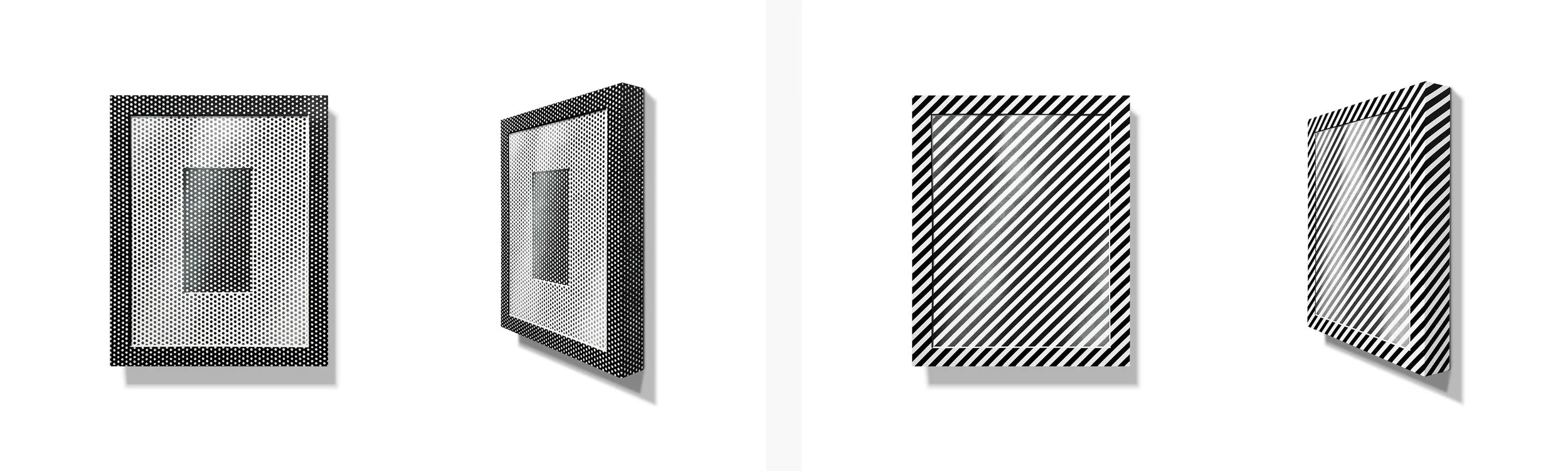
When you look at these works, they seem at first to be pictures in frames. But when you look a bit closer at the middle, where the image is supposed to be, there doesn't seem to be an image at all. You just see stripes or dots: a pattern that doesn't represent anything outside of itself. And the more you look, the harder it becomes to tell where the picture ends and the frame begins.
I began the Picture series earlier this year, while preparing for my solo exhibition at Krause Gallery in New York, Nothing to See Here. I'd been thinking about that title for years. I wanted to fill a space with work that looked simple, maybe even empty, but seemed to change the longer you looked at it. As I narrowed my focus, I found myself asking bigger questions about what a picture actually is, what a frame does, and ultimately, what makes something art in the first place.
I've been thinking about the relationship between the picture and the object since my sophomore year in college, when I happened across Frank Stella's painting The Marriage of Reason and Squalor, II. It's just black paint and raw canvas, with the two alternating to create a pattern of lines. I remember standing in front of it and feeling like I wasn't looking at a painting. It was an object. It wasn't trying to represent anything outside of itself. And for reasons I still don't fully understand, it made me cry.
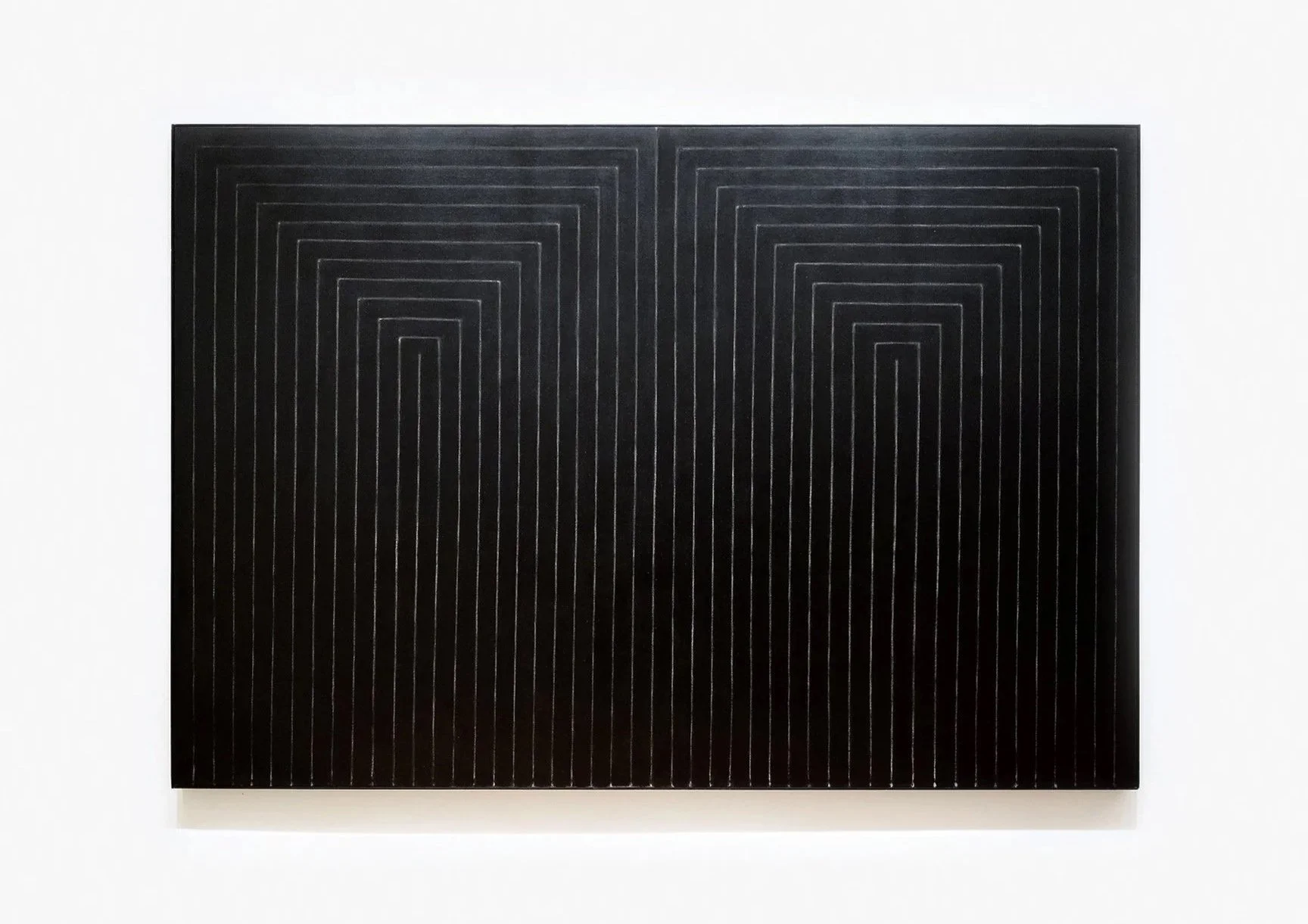
Frank Stella, The Marriage of Reason and Squalor, II, 1959
I've spent much of my life trying to understand why. That moment completely changed my perspective on what art is and what it can do. If a painting that had been sitting on a wall for half a century could affect me so profoundly, I couldn't imagine doing anything with my life more worthwhile than trying to create that experience for someone else.
Stella also made me realize that a painting didn't have to have an image to take you somewhere. It could simply be, and somehow open up a passage to an experience much bigger than the object itself.
Stella made me question what a painting could be. Magritte made me question what an image really is.
Magritte explored the idea in an amusing way in The Treachery of Images. It's a painting of a pipe with the words “This is not a pipe” written below it. And he's right. It's an image of a pipe, not a pipe itself. You can't smoke it. It's simply a representation of the idea. It's an illusion.
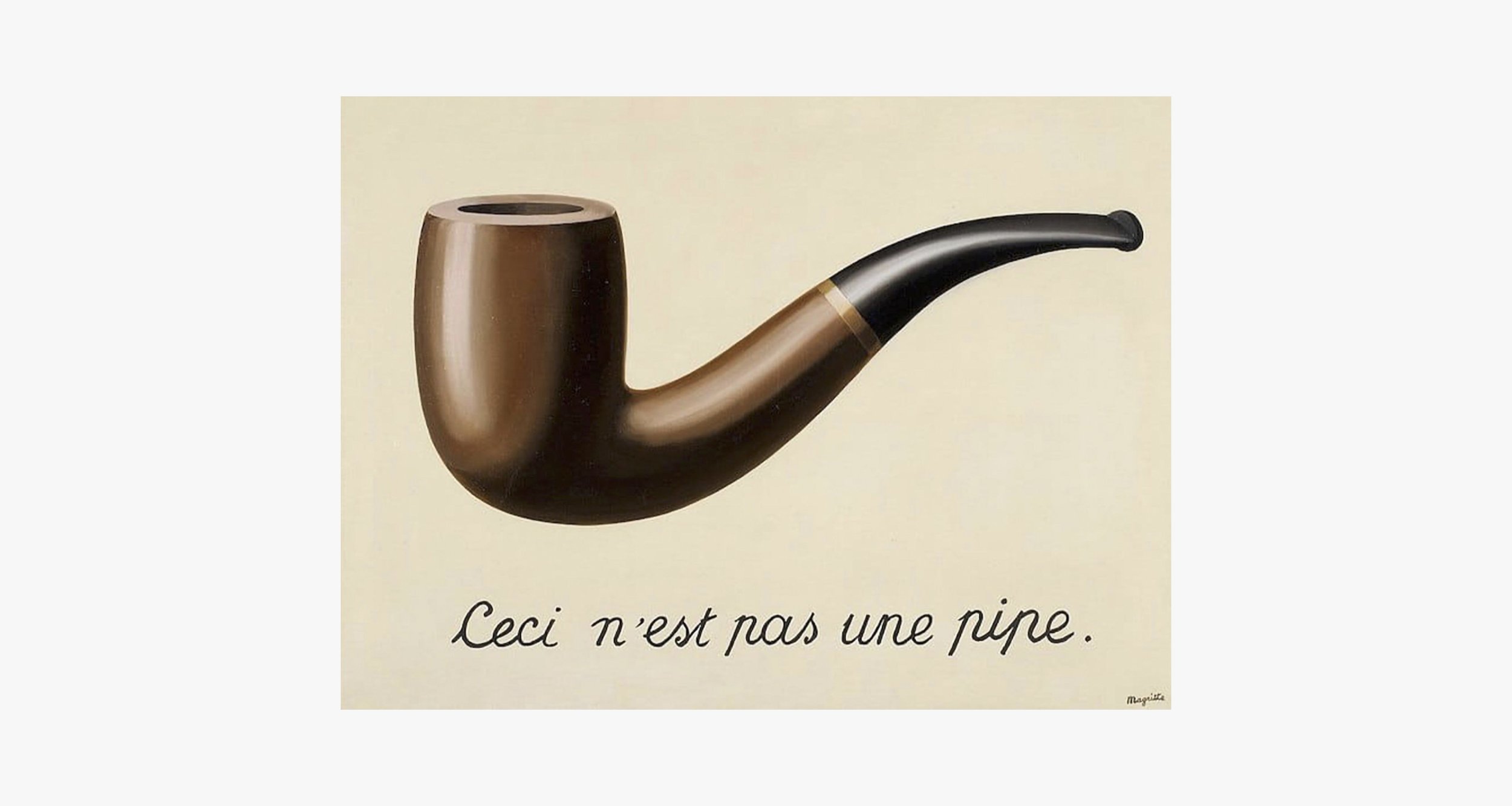
René Magritte, The Treachery of Images (This Is Not a Pipe), 1929.
But Roy Lichtenstein is where these ideas really started to come together for me. He's been the biggest influence on this series, and one of the biggest influences on my work in general. In Stretcher Frame with Vertical Bar, he painted the back of a canvas. The subject of the work is essentially the object the image is painted on. It is an image. It's representational. But it's an image representing itself.
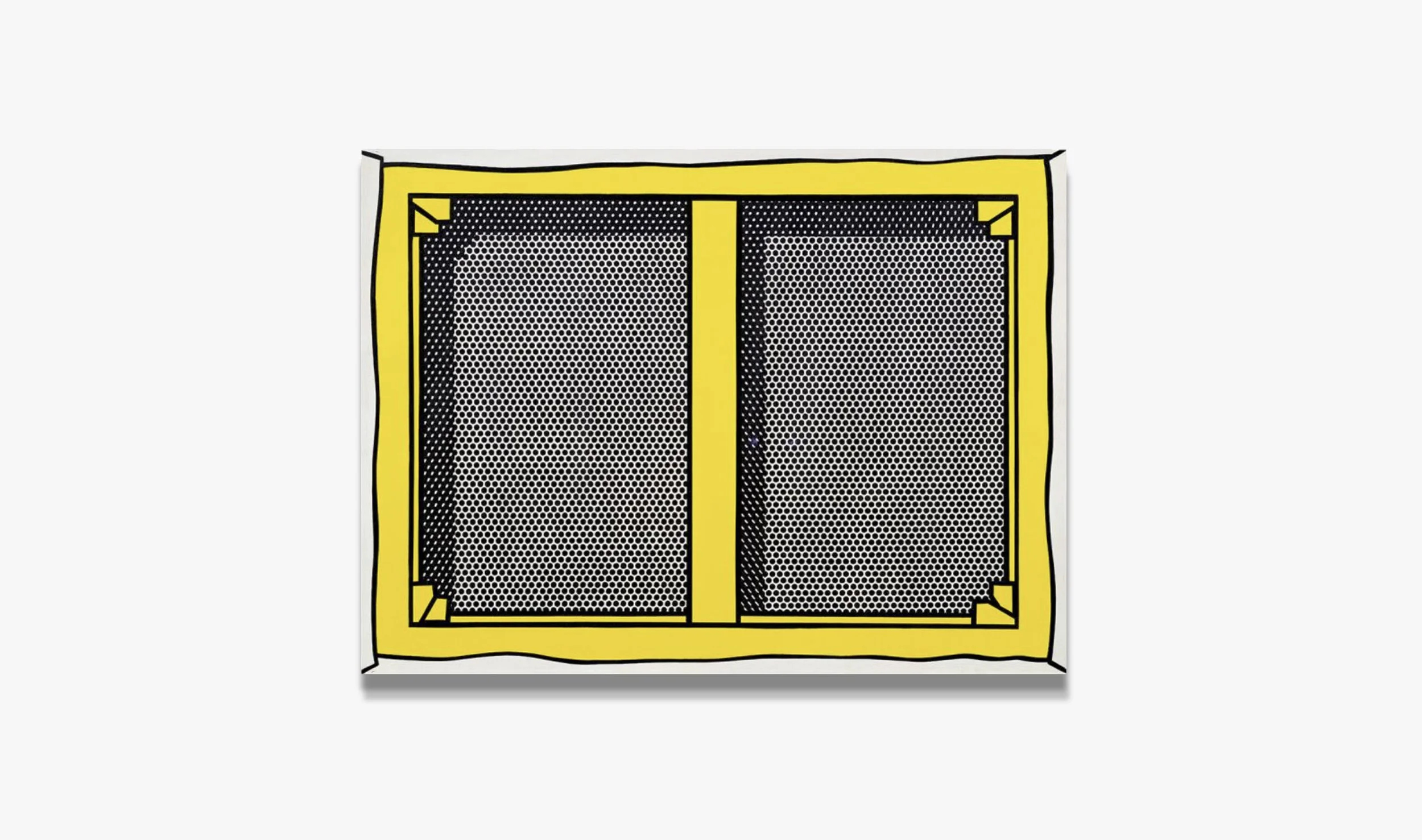
Roy Lichtenstein, Stretcher Frame with Vertical Bar, 1968.
And in his Reflection Series, he recreated paintings he'd made in the past, but painted them to look as though they were inside frames, behind glass, and obscured by reflections. What excited me most about these works was that displaying the painting and looking at it became part of the image itself. That made me wonder: What if the entire image under the glass were obscured? What would the painting be of then?
And that question led me to the Picture series.
The work creates the idea of something that isn't actually there. There is no frame. There is no glass. There is no "picture" in the middle. But dividing the surface into a center and an outside creates a hierarchy. The individual elements are abstract, but their relationship to one another creates the representation.
The image is false, but the object is true. It's a picture with no picture. The work blurs the line between image and object, between abstract and representational.
These moments when something familiar changes, that perspective shift, is what I'm really interested in. You think you know what you're looking at, and then it all changes inside your head. But the work hasn't changed. You have. And somehow, that changes the work, too.
How far can I push the boundaries of an artwork before it becomes something else? Can two seemingly contradictory ideas exist at the same time and both be true? I've been trying to answer these questions ever since I stood in front of that Stella painting. I suspect I'll be asking them for the rest of my life. I can't decide whether that's a curse or a blessing. Probably both.